
How Clara Schumann Died
The myths and the truth behind her last days

Dear Clara fans,
It’s May 20th. On this day in 1896, my favorite composer, Clara Schumann died in Frankfurt. Below, I’m going to contrast some of the myths with what actually happened. But first…
Thank you so much for the positive response to the cover reveals and the preorder posts about the book. (If you missed it, read it here.) MADAME COMPOSER: The Virtuosic Genius of Clara Schumann will be here September 29. After over a year of working on this biography in a vacuum, it’s been surreal and wonderful to get so much enthusiasm from all corners. I am thrilled to find the cultural demand for this book is more vibrant than ever.
I also had an extraordinary experience in New York City, or three experiences, this past month, doing post-show Q&As for Elena Mazzone’s sold out Clara: Sex, Love, and Classical Music at the 59E59 St. Theater. The audience response each night was overwhelming. They were full of more questions about Clara Schumann than we had time to answer. The stage manager had to stop us each night!
I’m currently booking events for the autumn, to promote the book. If you or an organization you’re a part of would like me to give a talk, lecture, reading, Q&A etc.—either remotely or in-person—please reply to this email and we’ll get something on the calendar before it fills up. Some very exciting events are already in the works which I can’t wait to tell you about!
And if you’d like to preorder the book…
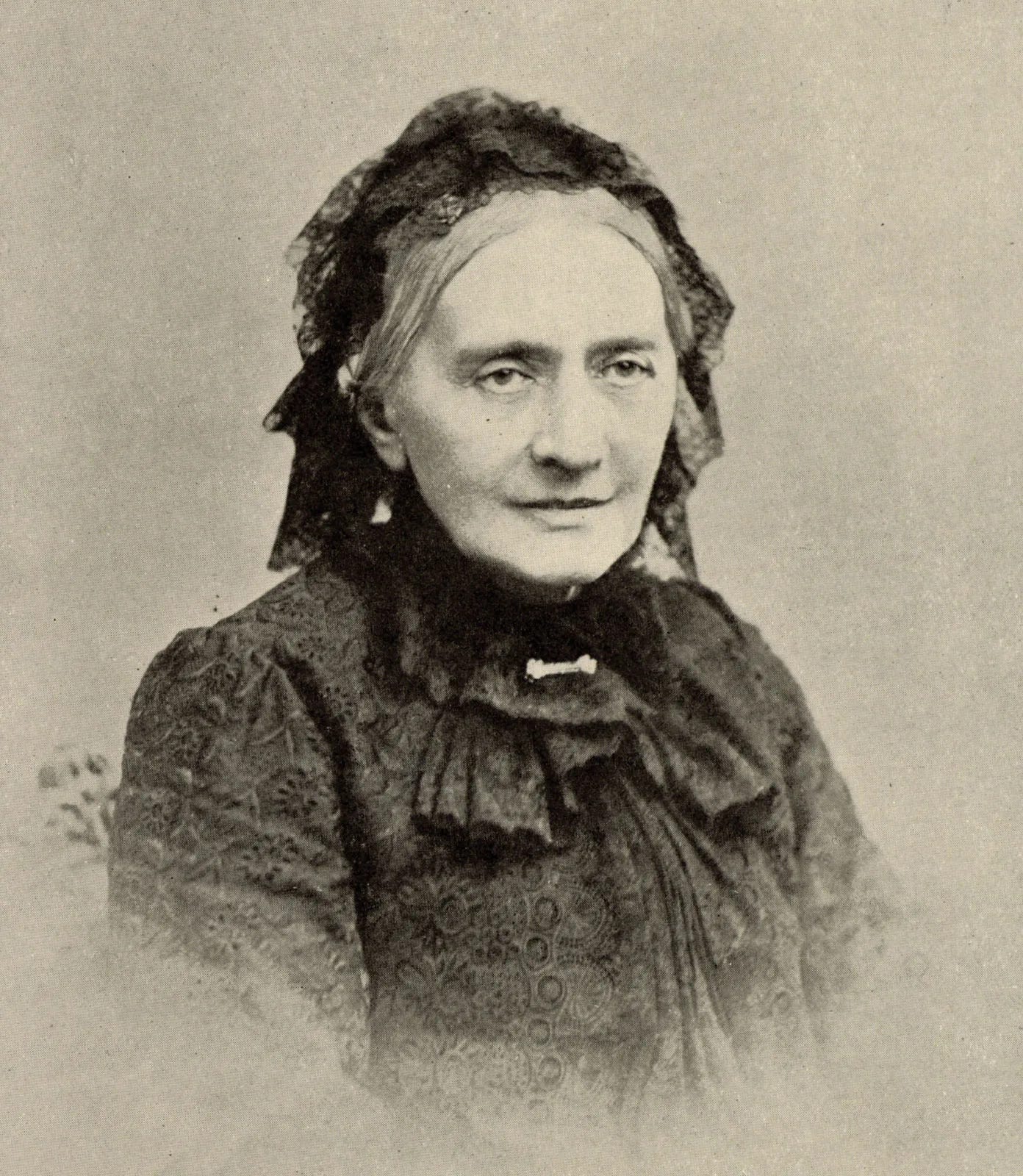
The Myths of Clara Schumann’s Death
Clara Schumann lived a long fulfilled life. She died at the age of 76 at her home in Frankfurt surrounded by her daughters and grandchildren.
There are a number of false tales out there about her death, born more of poor assumptions than of misinformation. Because the last forty years of Clara Schumann’s life is the least talked of—after her historic prodigy years and marriage to Robert—it’s lead to some weird beliefs that she died soon after her husband.
Reader, Robert Schumann died in 1856. Clara Schumann died in 1896.
One of my original very popular tweets 5 years ago was, “No, Clara did not die with her husband. She lived for forty more years.”
During those forty years, she gave dozens of international concert tours, hundreds of concerts, shaped the canon as we know it, and was a piano professor. In other words, after her husband’s death, she lived a great deal more. Her marriage, only 16 years of her life, was a relatively short period. She also exchanged hundreds of letters with Johannes Brahms and exercised immeasurable influence on his career and works. To miss the last forty years of her life is to miss the real reason why she lived on so strongly into the twentieth century.
The other myth comes from yet another assumption via her husband. The presumption that since Robert died of syphilis, then Clara must have too.
Reader, Clara Schumann died of a stroke.
Neither Clara nor any of the Schumann children died of syphilis. Presumably, something about the treatment Robert received early on for the STD made him not contagious, but exactly why is a bit of a mystery. (It’s also one of the arguments for the possibility that Robert died of something else. Posthumous medical diagnosis is messy!) But for certain, Clara did not die of syphilis.
How Clara Schumann Died
In March of 1896, Clara felt ill all month and on the 26th she had a mini-stroke. She was bed bound. Marie Schumann, Clara’s eldest daughter wrote to Johannes Brahms of the sad news. Johannes wrote back that he wished to see her before she died.
“With a heavy heart, I must ask you, if you think the worst is to be expected, to be so good as to let me know, so that I may come while those dear eyes are still open; for when they close so much will end for me!”
Johannes Brahms to Marie Schumann, Vienna, April 1896
From April 3, Clara’s condition seemed to improve. On May 7, her grandson Ferdinand reminded her of Johannes’s birthday and so she wrote him a brief birthday greeting “from your affectionate and devoted Clara Schumann.”
On May 8, Clara was able to go outside in a wheelchair to her garden, to visit her flowers. Johannes was encouraged that her health was improving and Marie Schumann expressed optimism that they would see him in Baden in June. But that was not to be.
On the night of May 10th, Clara had a much more severe stroke. Then on May 20th, she died.
The last music Clara heard was her grandson Ferdinand playing one of her husband’s romances. Her funeral was held in Bonn, for her to be buried with her husband, where he’d died in the hospital Endenich forty years before.
Johannes Brahms almost missed the funeral. He forgot to go to Bonn and travelled to Frankfurt first instead. Marie held the service for Johannes for as long as she could. The story goes that he arrived as the coffin processed from the church to the graveyard, and he sobbed that he’d lost the last person he loved.
Clara died believing that, since she was not a “creative” artist (as in not a composer), she would be forgotten. She had absolutely no hope that her compositions would live on in history.
I am very happy to say—oh, how wrong she was!